SaaS Playbook
SaaS Dashboard Playbook
Software as a Service or SaaS dashboard is a powerful business tool that can provide a quick snapshot into the health of your business. Right from reducing churn to increasing customer engagement and finally revenue growth, ambitious businesses can analyse all touch points in no time through the dashboards.

Why?
In the last decade, SaaS market has experienced tremendous growth and expansion. With innovation and new products emerging in the markets, competition has never been so fierce. Whether it’s an IT report or company finances that you want to dive into, a clean interactive screen is much better than complicated spreadsheet analysis. Dashboards maintain awareness of key metrics, how they interact and how to improve them for a better performing and profitable business.
So here’s a list of 18 dashboards that can help you get control of your SaaS business. It can be divided into five categories:
Executive Dashboards dive into details that are SaaS Business specific. They cover the hidden aspects of SaaS industry and help executives make smart decisions related to dynamic pricing of products, prevention and prediction of churn, optimized channel sales operation etc. They help identify patterns and actionable insights from large datasets that can help design teams optimize their product features, marketing strategies and workflow.
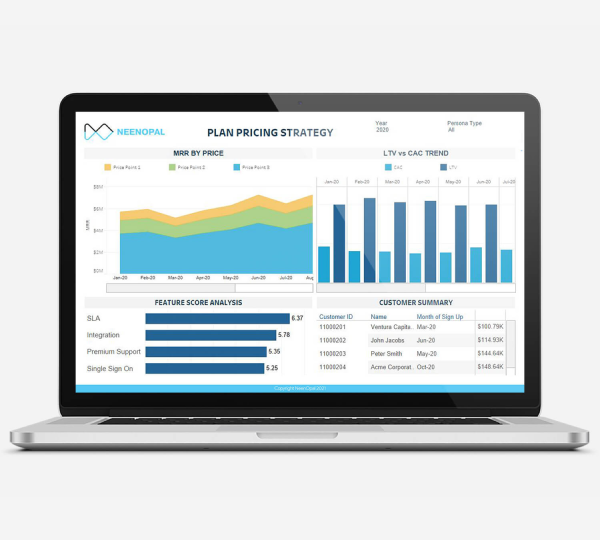
SaaS Pricing Analytics
Is your pricing right and optimized?
Pricing is the most important aspect of a business. In spite of its multiplicative effects on revenue, pricing is often ignored and receives least attention. In today’s market, where there is constant volume and pricing pressure, a right pricing strategy is essential to remain in the game. The pricing analytics dashboard answers the following:
1. What is the effect of different price points on revenue and profit margins?
2. How are different channels and regions performing? Is ASP appropriately optimized?
3. What are the most liked product features? Are we cashing in on them?
4. How is the LTV and CAC trending? Are acquisition costs delivering desired value?
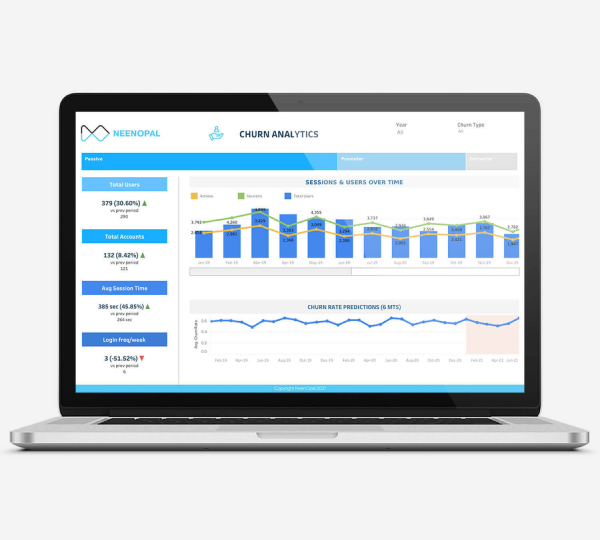
SaaS Churn Analytics
Are you tracking churn proactively?
Churn is a key metric used for percentage of customers who have discontinued your service. Keeping a close eye on retaining ‘at risk’ customers is crucial to revenue given that it costs 5x more to acquire new customers. The Churn dashboard answers the following questions:
1. How is churn varying across geographies? What is the effect on revenue?
2. What are the top reasons for churn? What changes in the current processes can reduce churn?
3. How are different user segments engaging with the product? (Website, features etc)
4. What are the predicted churn rates for the next 6 months?
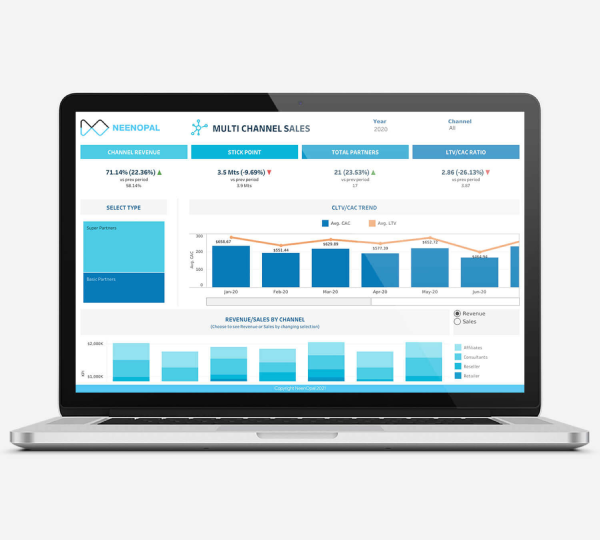
SaaS Multi-Channel Analytics
Are you tapping on multi-channel investments for SaaS Sales?
Technical developments in the last decade have transformed the sales process for software products. Although digital marketing is gaining a lot of traction, many organizations fail to upkeep themselves with effective digital strategies. To enable access to a broader market, SaaS organizations need to embrace multi-channel sales to effectively target and engage consumers. This dashboard helps in the following:
1. Compare key SaaS metrics for direct sales vs channel sales.
2. Keep track of revenue generated by sales partners and grow businesses sustainably.
3. Tracking revenue generated by sales partners to grow business sustainably.
4. Tailor marketing efforts based on buying persona and channel type.
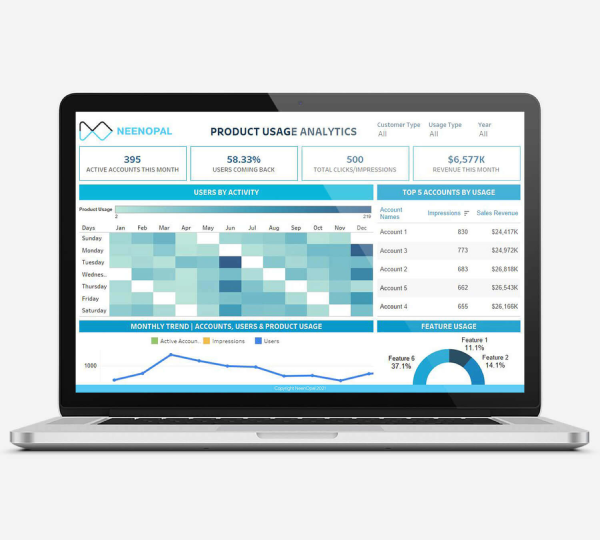
SaaS Product Usage Report
Are traditional surveys enough to track product-user interaction?
For a product centric company, the growth majorly depends on product and its usage. Product Usage Analytics is a way of critically analysing how users interact with a product. Unlike surveys, its not dependent on what customers write in a feedback form or interviews but the insights are majorly derived from meaningful product user interactions online. Product Usage team can thus rely on this data to make important decisions. The dashboard answers the following:
1. How engaged users are?
2. Are users returning after signup?
3. Who are using my product the most and the least?
4. Which features are most popular?